
For most of the last decade, "safety software" in Australia meant a login page, a course library and a spreadsheet of completions. It ticked a box. It didn't move the needle. Serious incident rates in agriculture, construction and manufacturing haven't budged in a decade — despite more training, more paperwork and more platforms than ever before.
AI workplace safety software is the first genuine break from that pattern. Not because AI is fashionable, but because the biggest driver of preventable harm in Australian workplaces — the gap between training delivered and training understood — is finally solvable at scale.
This guide walks through what AI safety software actually is, what it does inside the platform, how it differs from a traditional LMS, and what to look for when evaluating an AI safety platform for an Australian high-risk workforce.
What is AI workplace safety software?
AI workplace safety software is a platform that uses artificial intelligence to deliver, personalise, translate, verify and analyse workplace safety training and compliance. The label is broad by design — different vendors put AI in different parts of the workflow. What separates a genuine AI safety platform from a legacy LMS with a chatbot bolted on is where the AI sits: at the core of learning delivery, not the edges.
In Australia, the pressure driving adoption is structural. Safe Work Australia's Key WHS Statistics continue to show agriculture, construction and manufacturing carrying the highest fatality and serious injury rates. Those industries also employ the highest proportion of workers from culturally and linguistically diverse backgrounds — workers who often experience safety training in a language they don't fully read or speak.
Traditional workplace safety software has no answer to that. AI does.
The four things AI actually does inside a safety platform
Translates and voices content into 140+ languages on demand
Personalises modules by role, literacy and learning style
Verifies comprehension with AI assessment and voice check-ins
Predicts risk from workforce, completion and near-miss data
Why traditional workplace safety software keeps failing
Legacy safety LMS platforms are optimised for the wrong outcome. They measure completion — a metric that quietly conflates "logged in", "clicked next" and "actually understood". In an English-first, literacy-first cohort those three states tend to overlap. In an Australian frontline workforce, they diverge sharply.

The result is a documented pattern: workers pass modules they didn't fully comprehend, sign records they can't read, and get hurt executing procedures they were nominally "trained" on. As we covered in the real link between safety training quality and incident rates, the correlation between training hours and incident reduction is weaker than most safety leaders think — because the industry has been measuring the wrong thing for years.
AI changes the unit of measurement from training delivered to understanding proven. That single shift reshapes every downstream number — completion, competency, near-miss reporting, incident rates and audit evidence.
Six capabilities that separate real AI safety software from marketing
1. Multilingual, voice-first delivery
The single highest-leverage AI capability is native-language, voice-first delivery. Written translation alone doesn't close the gap for workers with low literacy in any language. AI narration in 140+ languages — synchronised with visuals, gestures and workplace imagery — does.
2. Personalisation by role and learning style
Generic modules waste workers' time and dilute the signal. AI-personalised pathways use role, site, prior competency and VARK learning style to route each worker through the right modules in the right sequence.
3. AI assessment and voice check-ins
Click-through completion is not evidence. AI assessment — scenario-based questions, voice check-ins in the worker's language, and role-based hazard recognition — is. Regulators, insurers and coroners are increasingly asking for this kind of comprehension evidence, not attendance records.
4. Predictive risk analytics
AI turns training data into risk signals. Which cohorts fail comprehension checks? Which modules aren't landing? Which sites are approaching expiry cliffs? Predictive analytics surface these patterns weeks or months before an incident — the entire point of a Learning Intelligence Platform.
5. Automated compliance orchestration
Renewal cycles, role-based assignment, expiry reminders, audit exports — all of it managed by AI, not spreadsheets. This is where AI reclaims WHS teams' time for the work AI can't do: coaching, culture and investigation.
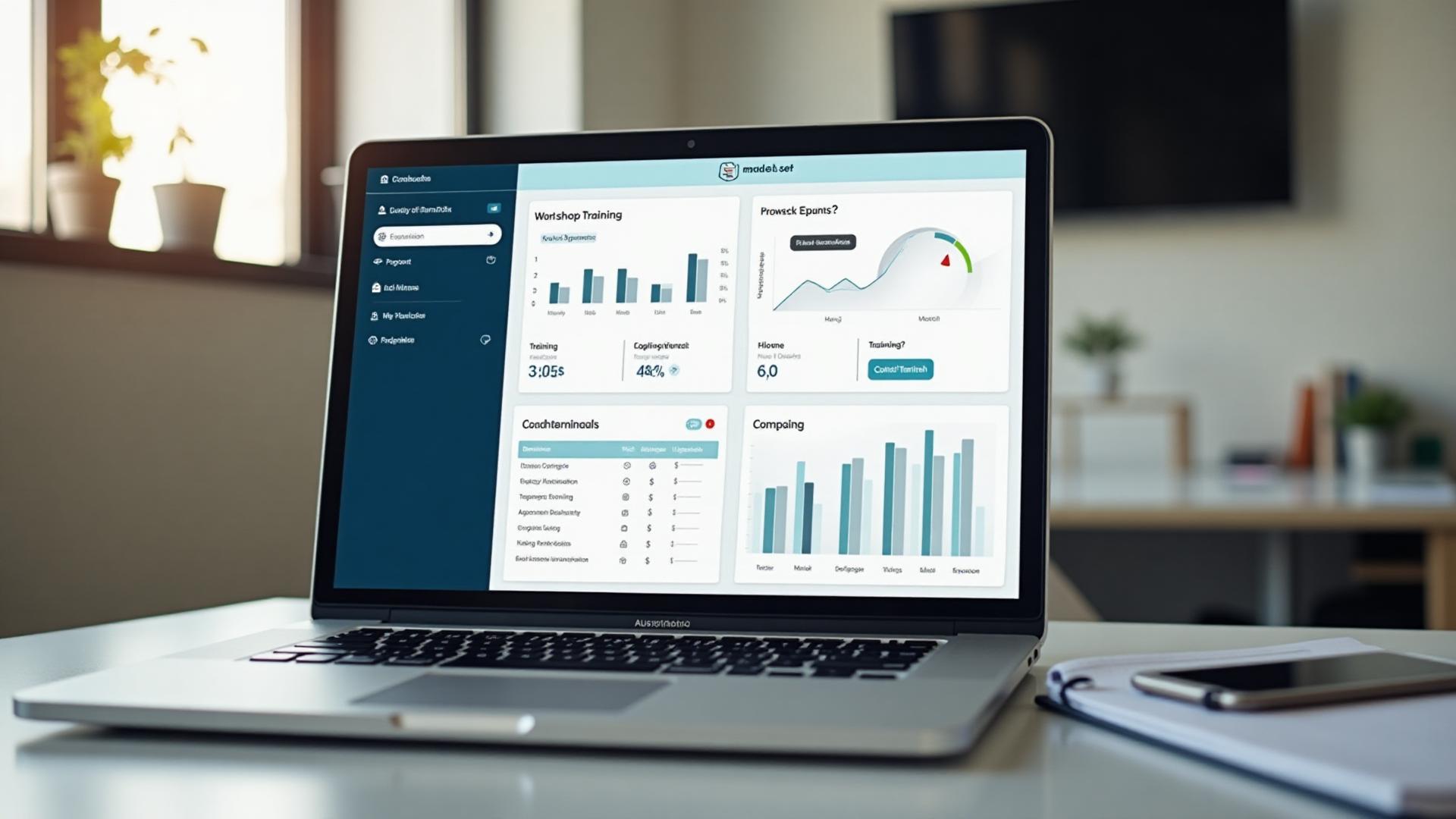
6. Live safety dashboards
Real-time visibility on competency, comprehension, expiry and near-miss trends across every site and cohort. Not month-end PDFs — live signals safety leaders can act on today.
Is AI safety software WHS compliant in Australia?
Short answer: yes — and typically more defensible than legacy training. Under the Model WHS Act, employers must provide information, training and instruction that workers can understand. English-only delivery to a CALD workforce is a documented compliance gap.
AI workplace safety software directly addresses that obligation. Verified multilingual training, timestamped in the worker's first language, with an AI-generated assessment record, is stronger evidence at audit than a signed-off English module the worker couldn't read.
What to look for when evaluating AI safety software
Not every vendor branding themselves "AI" is actually running AI where it counts. When evaluating platforms for an Australian frontline workforce, check five things:
- Language depth. Not 5–10 pre-recorded translations — AI-generated voice and text across 100+ languages, updatable in one click.
- Comprehension verification. Real assessment tied to specific hazards and tasks, not multiple-choice trivia.
- CALD workforce fit. Voice-first delivery, low-literacy accessibility, and content designed with — not translated for — diverse workforces.
- Audit-ready evidence. Every completion captured with language delivered, worker ID, timestamp and assessment result.
- Time to value. Days-to-weeks deployment, not months. Existing SOPs ingested and transformed, not rebuilt from scratch.
These are the design principles that shape Acumind's AI workplace safety software, built specifically for Australian high-risk, blue-collar, CALD workforces.
See AI workplace safety software in action
A 30-minute walkthrough showing how Acumind delivers verified safety training in 140+ languages with real-time risk signals — built for Australian industry.